"What does any of this prove beyond the fact that you have a High School level grasp of History? "
The natonal flag demonstrates that the empire was founded upon war and sacrifice. The pourtusge flag is a memorial of this fact.
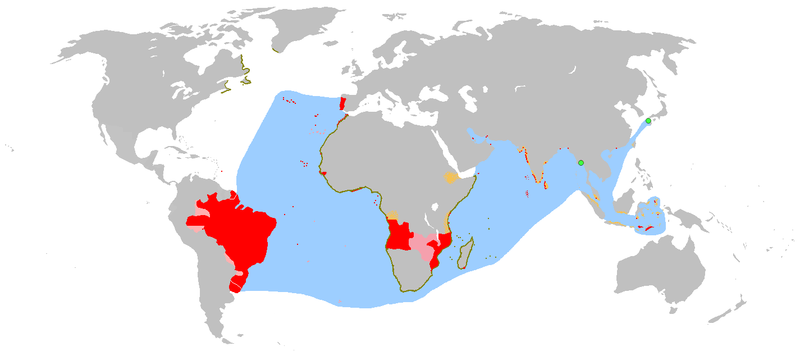
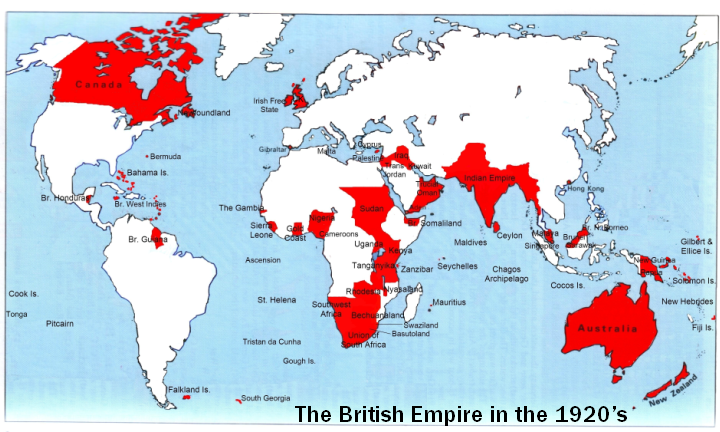
"The Portuguese Empire was smaller and weaker than the English or Spanish Empires at their apexes. "
This doesnt address my point. If you want to be the greatest conquerer you cant just run from the ocean liek teh ROmans did, you have to conquer the oceans.
A discussion about Porutuse and brittish empires etc belongs in another forum or i will end up writing 500 word repsonses in here...
"They couldn't cross the ocean because their ships weren't suited to that. They were built for crossing the Mediterranean."
First: Neither did the p/guese but they solved that problem.
Second: yes, the ROmans could and did sail beyond the mediterranean often:
"In 56 BC, for the first time a Roman fleet engaged in battle outside the Mediterranean. This occurred during Julius Caesar's Gallic Wars, when the maritime tribe of the Veneti rebelled against Rome. Against the Veneti, the Romans were at a disadvantage, since they did not know the coast, and were inexperienced in fighting in the open sea with its tides and currents.". - Roman navy
Afterwards, Augustus tried to conquer arabian peninsula for trade reasons - but was unsuccessful.
This is where afonso steps in being the first european to take control of teh gulf region both coastal regions and the entire indian ocean stretching across oceania and down to the timor region (Oceania). Three continents. Did the spanish fight the protugse in Oceania - yes. Afonoso pushed them out though greatly outnumbered. The Spanish were defeated and teh records show afonoso alberquerque won if not every battle - he won the war with a clear victory against the Spaniards - in Indonesia/Malasyai/phillipines regions. The Pope helped the Spaniards: it was the Papal bull that set a boundary there - called teh treaty of zaragoza. The pourtugse would not cross that line. Thus, granting ot the Spanish the Phillipines.
Not the Spanish empire, not the Ottomoan wmpire or the Egyptian empire could conquer afonso on land or beach, or sea. he won wars greatly outnumbered. His military projects and conquests held kept and setup the pourtugse empire across three continuents standing for over 150 years.
"That isn't the same as Portugal conquering Brazil. Way to miss the point."
Dutch-Portuguese War - 1630-1654. Outcome = Portuguese won = conquest of Brazil. if teh Dutch had won, it would have been teh Dutch conquest of Brazil.
Yes there were naval battles between teh protugse and dutch but in most cases if not all they were sorely uotnumbered and still won the war:
23rd May 1649 - upon '...meeting, it is not at first apparent to the Portuguese the numerical superiority held by the Dutch...'. Who won? Portugal.
8th June 1653 - "...The portuguese, outnumbered ...".
"The invasion began with a series of temporary conquests by the Dutch of some principal ports in Portuguese Brazil such as the capital Salvador and Olinda. The whole Brazilian northeast was occupied and Recife was renamed Mauritsstad. The Dutch were opposed by the general government's efforts to expel them, directed from Salvador, Olinda and the countryside." - dutch porutugse war
The porutugse conquered that land back from teh hands of the Dutch (major capital cities of Brazil).
yes the porutugse had many naval battles against the dutch but the Dutch presence and occupation of Brazil was huge. Not just a few beaches along the coastline. In addition to the cities above mentioned, they also had occupationg of vast lands of the interior regions of Brazil. Right into the country of Brazil.
"From 1630 onward, the Dutch Republic came to control almost half of Brazil's area at the time, with their capital in Recife. The Dutch West India Company (WIC) set up their headquarters in Recife." Most of brazilian territory wsa DUTCH occupied and governed. - Dutch Brazil
To say that the Dutch only occupied the coastlines of brazil is not seeing the full picture. They had occupied most of Brazil, in fact.
in addition, the dutch pourtugse battles were not all NAVY battles on coastliens and at sea. The greatest and most improtant of their battles occuered in Pernambuco brazil. a) It was a land battle and, also some 300 km's form teh coast of brazil. The pourtugse outnumebred again, won the battle. - see Second Battle of Guararapes
SO to summarize, the Dutch occupatoin anof Brazil was almost half of Brasil. Also entire states. Not coastlines as you stated. Brazil was won by conquest.
This stamtent is not correct on both points:
"Besides the Dutch never penetrated further than the coast and were driven off after a few years of primarily naval combat."
To clarify the next point:
"Lol. Portugal only handed over two cities to England: Tangiers and Mumbai. Important cities, but nowhere near as much as you try to make it out to be."
It was large and very significant to the brits. Mumbia is one of the largest cities in the world now and even in that time. Population of 2 million i believe. Manpower unparalleled. The brits made this city - after they recieved it form teh pourtugse - the Headquarters of the British East India Company. That is how important it was to them. IN addition, this dowry given to the brits was and still stands as teh largest dowry ever given in recorded history between nations. That is on record. I am not 'trying to make it out to be' anything.
In addition, morocco was very important on the world stage in those days. The powerful cities of morroco (given to egnland by th epourtugse) was extremely important to Queen Elizabeth 1 which is why she used morroco as one of her main trading allies - Important to british trading expansion for the british empire.
"You're heavily confuting an entire empire with a single conqueror. "
True. I can see this. But it lays the context and historical background.
Afonso was up against the greatest empires in history around the arabian peninsual, around the african contient, around India, the contient of Oceania and had Spaniards, Arabs, Persians, Egytpains, Mughuls all warring against him.
His successor and predecessors also.
But it was Afonso who setup the strategic points across those contienents. He wasnt just a warrior like Alexadner the great. He was also an adminsitrator. He didnt just fight on the front liines - he managed the empire from his base in Goa too which became one of the most lucrative cities in Asia. Afonso is a 'complete' conquerer. Which also was won by conquest against the most powerful Mughal's against great odds.
Alexander the great didnt adminster his empire. That was one less thing for him to worry about which is why he was able to cover so much land during his trek in 10 years. He let other adminstrator his lands for him back in Babylon. Not afonso. Greatest ofconquerer therefore must be able to manage and administer his empire, not just battle for it.
"Yes it was. Compared to the Spanish the Portuguese were much less warlike in their acquisitions as shown by Brazil."
The pourtugse were maingly engaged in war against the Islamic empires. It was an anti-islam empire. That is why afonso had it tough. he had all the islamic and hindu and Mughal empires surrounding him. He sailed into the Persian gulf and conquered there and established forts at the coastliens of his enemies. These stood for over 150 years.
Japan was not won by war. They easily converted initially, to the faith. Same goes for Brazil. This explain why they were less warlike in Brazil (in the 1500's).
"If you want to talk about religion you should note that the reason Portugal never had to compete with the real top dog (Spain) in any major way is that the Pope divided the world between them."
The pourtugse arrived in Malaysia before the Spaniard (1511): 'In 1511 Malacca, then the center of Asian trade, was conquered for Portugal by Afonso de Albuquerque'.
After proutugse born magellan circumnavigeted the globe for teh Spanish grown (1519-22), to find asia for spain - the Spaniards afterwards used that route to establish colonies in Malaysia. Problem is - portuguse were there already. So there was a huge battle between the two empires at this point. History records teh porutuse pushed out the spaniards from teh region they occupied in asia throughout military conquest.
"The conflict with the Portuguese already established in Ternate there was inevitable, resulting in the Spanish defeat after a year of fighting, starting nearly a decade of skirmishes over the possession.". - treaty of zaragoza
In another soruce:
"The first period of Spanish interest in the Moluccas was characterized by fights against the Portuguese for the control of the islands. It began with the arrival of the Magellan expedition, and ended in 1545 with the surrender to the Portuguese by Villalobos’ army."
The Pope indeed, came to help - the Spaniards by drawing a line or treaty of zaragoza (1529). Effecitvely granting to the Spanish the east side of the OCeanic region: where modern day philipines lies (and even this was an error cause philipines belonged to the pourtugse side of the line).
This is only one example in history of pourtuse defeating Spanish at land, and I will not speak more of portuguse and spanish issues beause we are talkign about conquerers.